No products available yet

Stay tuned! More products will be shown here as they are added.

Professional slicers for catering

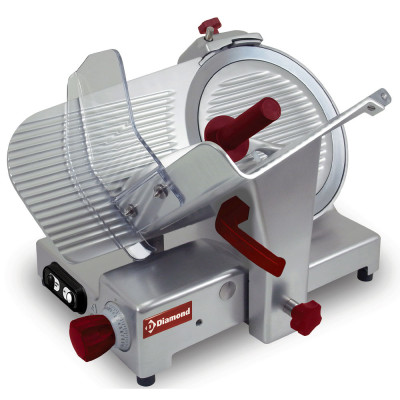
The slicer is the reference tool for cutting charcuterie, ham, meat and cheese into regular, precise slices. In a few movements, it produces slices of consistent thickness, enhances presentation and limits waste compared with knife cutting. Essential in delicatessens, restaurants, catering and canteens, it comes in several blade diameters and several operating principles. Our range covers every need, from the compact Ø 190 mm blade slicer to high-output professional Ø 350 mm models, in stainless steel and designed for intensive use. Choosing the right slicer means matching blade diameter, type and drive to your products and volume.

The blade diameter

The blade diameter determines the maximum size of pieces to slice and the output. A 190 mm blade suits light use and small pieces; the 250 mm and 275 mm blades cover everyday needs; the 300 mm and 350 mm blades are essential for large charcuterie and high production. Choosing the right diameter ensures smooth work: too small a blade limits piece size, an oversized blade needlessly crowds the worktop.

Gravity (oblique) or vertical slicer?

Two principles coexist. The oblique, or gravity, slicer has an inclined carriage: the product descends naturally towards the blade, easing the cutting of charcuterie and ham. The vertical slicer, such as the 350/BSS-N or the 350/VCS-N, has a vertical carriage suited to large pieces and intensive use. The choice depends on the type of products and volume: oblique for versatility, vertical for heavy pieces and a sustained pace.

Drive: belt or gears

The drive links the motor to the blade. Belt-driven models are quiet and suited to everyday use. Gear-driven models, such as the 350/GXS with gears, offer higher torque and suit intensive use and dense products. A robust drive ensures consistent cutting without power loss, even in continuous service. The drive type affects the appliance's durability and noise level, to consider according to the working environment.

Thickness adjustment

The slicer lets you precisely adjust slice thickness via a graduated dial, from a transparent veil for cured ham to thicker slices for roast. This precision guarantees a neat presentation and perfect consistency, service after service. Reliable, repeatable adjustment is essential to respect grammages and control food cost, especially when charcuterie is sold by weight or portioned in advance.

The blade sharpener

A well-sharpened blade is the key to a clean cut. Most professional slicers include a sharpener, fixed or removable, to maintain the edge directly on the appliance. A blunt blade tears the product instead of slicing it, degrades presentation and strains the motor. Regular sharpening, as recommended, preserves cutting quality and extends the life of the blade, the slicer's key component.

Varied uses

The slicer is for many trades: delicatessens and butchers for ham, sausage and meat; restaurants and caterers for charcuterie platters and sandwiches; cheese shops for some cheeses; canteens for bulk portioning. The Buffalo ham slicer illustrates this specialisation. Its ability to produce regular slices makes it a central tool of processing and service, wherever presentation and consistency matter.

Safe operation

The slicer requires strict precautions. Always use the product holder and blade guard, never slice without the carriage, and unplug the appliance before cleaning. Professional models include standard-compliant guards, including a protection ring around the blade. Cleaning the particularly sharp blade demands great care. Following these rules protects users and meets the workplace safety obligations specific to kitchens and food businesses.

Stainless construction and hygiene

In direct contact with food, the slicer must meet strict hygiene requirements. Stainless steel and anodised aluminium surfaces clean and disinfect easily, in line with the HACCP method. Removable parts — carriage, product holder, blade guard — make thorough cleaning easier. Maintenance after each use prevents cross-contamination, especially between meat and cheese. Stainless resists corrosion and ensures high durability despite intensive use and frequent cleaning.

Maintenance and durability

To last, the slicer needs regular maintenance: thorough cleaning after each use, periodic blade sharpening, checking the guards and lubricating the designated parts. Disassemble removable elements for deep cleaning and dry carefully to prevent corrosion. Do not force frozen or bone-in products, which damage the blade. Well maintained, a professional slicer keeps a clean cut and lasts for years without performance loss.

Slicing charcuterie, cheese and ham

Each product has its requirements. Cured ham is sliced very thinly, almost transparent, to reveal its aromas: a well-sharpened blade and precise adjustment are essential. Cooked charcuterie and sausage require a regular cut of a few millimetres. Some firm cheeses can also be sliced, provided a suitable blade and careful cleaning between products. The Ø 350 mm slicer and its variants offer the versatility and precision needed to move from one product to another throughout service, without compromising cut quality.

Presentation and cost control

Beyond precision, the slicer is a commercial and economic asset. Regular, clean slices enhance a charcuterie plate, a platter or a sandwich, and give a polished image of the establishment. Precise thickness adjustment helps respect grammages, control food cost and limit waste. For sale by weight, slicing to order ensures freshness and presentation. From the Diverso Ø 250 mm to the Ø 350 mm models, each slicer contributes to better profitability and consistent quality.

How to choose your slicer

Several criteria guide the choice: the blade diameter (190 to 350 mm by piece and volume), the type (oblique gravity for versatility, vertical for large pieces), the drive (belt or gears), and the presence of a sharpener. Also consider ease of cleaning and footprint. Cross-referencing these with your activity — delicatessen, restaurant, canteen — will reveal the most suitable model.

Our selection and related categories

Browse our slicers and complete your station with the other equipment in the dynamic preparation family: the meat mincers, the mincers & parmesan graters, the vegetable cutters, the mixers and the scales & weighing machines. A well-equipped kitchen or delicatessen combines slicing, mincing and weighing for fast, polished production.

Frequently asked questions

Which blade diameter should I choose? 190-250 mm for light use, 275-300 mm for everyday use, 350 mm for large pieces and high output.

Oblique or vertical? Oblique (gravity) is versatile; vertical suits large pieces and intensive use.

Belt or gears? Belt is quiet for everyday use; gears offer more torque for intensive use.

Should the blade be sharpened? Yes, regular sharpening ensures a clean cut; most models include a sharpener.

Can I slice frozen food? No, the slicer is for fresh products; frozen food and bones damage the blade.

How do I clean the slicer? Disassemble removable parts and disinfect after each use, with care around the blade.

Which model for a delicatessen? A 300 to 350 mm blade, oblique or vertical by piece, ideally gear-driven.

Integrating the slicer into the workstation

For comfortable, safe use, install the slicer on a stable surface at a suitable working height, with enough clearance around the carriage. Provide a clean space to collect the slices and easy access for daily cleaning. A well-thought-out location, away from busy thoroughfares, improves ergonomics and safety. In a delicatessen as in a kitchen, a well-positioned slicer streamlines service and reduces the strain of a gesture often repeated throughout the day, while keeping the blade and guards easy to inspect before each use.

Productivity and consistency

Beyond precision, the slicer is a productivity tool. It cuts large quantities far faster than by hand, with perfect regularity, freeing staff for other tasks and ensuring consistent presentation. Precise thickness control keeps grammages on target, which protects food cost and reduces waste, and lets the team reproduce the same result whoever is slicing. From the compact Ø 190 mm model to the Ø 350 mm gear-driven slicer, each machine turns a repetitive task into a fast, controlled step that supports both quality and margins over a long working life.

Is the sharpener built in? On most professional models, yes: it maintains the edge directly on the appliance.

What thickness for cured ham? Very thin, almost transparent, thanks to precise adjustment and a perfectly sharpened blade.

Is the slicer suitable for canteens? Yes, a robust Ø 300-350 mm model handles bulk portioning throughout service.

Can I slice cheese? Yes, some firm cheeses, with a suitable blade and careful cleaning between products.

How do I preserve the edge? Sharpen regularly, never slice bones or frozen food, and clean the blade carefully after each use.

Which model for a delicatessen? A 300 to 350 mm blade, oblique or vertical depending on the pieces, ideally gear-driven for intensive use.

Does slicing to order help sales? Yes, fresh, regular slices improve presentation and customer confidence, and support sale by weight with controlled portions.

How noisy is a slicer? Belt-driven models run quietly, suiting front-of-house use, while gear-driven models prioritise torque for heavy, continuous slicing.

Are removable parts easy to refit? Yes, carriage, product holder and blade guard detach and refit quickly, making daily cleaning fast and safe.

Does blade size affect speed? A larger blade handles bigger pieces and higher output, while a smaller blade suits light use and compact spaces.

This website uses cookies to ensure you get the best experience on our website