Filter By

Voltage (Electrical network)

Voltage (Electrical network)

Mixer type

Mixer type

Bowl capacity (L)

Bowl capacity (L)

No products available yet

Stay tuned! More products will be shown here as they are added.

Mixers and dynamic food preparation for catering

The mixer is one of the most versatile appliances in a professional kitchen. Kneading dough, whipping egg whites, emulsifying a sauce, blending a cake batter: a reliable machine saves precious time while guaranteeing consistent results, service after service. Our range covers countertop and floor planetary mixers, professional immersion blenders, bar blenders and milkshake machines. Each model is selected for its robustness, suitable power and ease of cleaning, to meet the real demands of restaurants, pastry kitchens and bars. Choosing the right appliance means matching type, capacity, power and supply to the way your team actually works.

The planetary mixer, a centrepiece

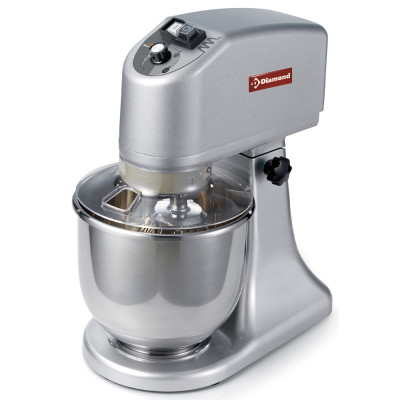
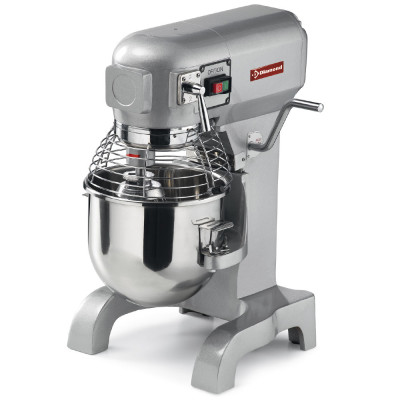
The planetary mixer takes its name from the tool's motion, which spins on itself while describing a circle in the bowl, like a planet. This dual movement ensures a fast, even mix with no dead zones. It is the reference appliance for pastry and bakery: it takes a whisk for airy preparations, a beater for mixes, and a hook for leavened doughs. Discover for example the 10-litre planetary mixer BM-10AT/N or the 20-litre BM-20AT/N, dependable choices for intensive daily use.

Bowl capacities from 7 to 20 litres

The capacity depends on the volumes handled. For a small establishment or occasional use, a 7-litre bowl is enough, as on the 7-litre BTM-7S/N or the Diverso 7 L WR-BM07-A1. The 9 to 10-litre formats suit most kitchens, like the Buffalo 9 L GL190, the digital 10 L FU137 or the Diverso 10 L WR-BM10-B2. For sustained production, 20-litre bowls are essential: BM-20AT/N, Diverso 20 L WR-BM20-C3, Buffalo 20 L FU138 and Buffalo 20 L GL191.

Tools: whisk, beater and hook

The planetary mixer's versatility lies in its three main tools. The whisk incorporates air for whipped creams, meringues and sponge cakes. The beater (flat tool) mixes denser preparations such as cake batters or purées. The hook kneads leavened doughs (bread, brioche, pizza) without heating the dough. This modularity makes the planetary a unique tool able to cover a large part of a kitchen's preparations, from savoury to sweet, with a simple change of accessory.

Speeds and variable drive

Speed control is essential: you start slowly to incorporate ingredients without splashing, then accelerate to aerate or knead. Some models offer several fixed speeds, others a smoother continuous variable drive. The 7 L variable-speed planetary illustrates this progressive approach, while the 10 L and 20 L models offer three speeds suited to the main uses. A good speed range guarantees clean results, whether whipping cream or kneading a firm dough.

Professional immersion blenders

The immersion blender, or stick blender, blends directly in the pot, avoiding transfers and losses. Ideal for soups, veloutés, sauces and coulis, it comes in various tube lengths depending on container depth. For large volumes, the 80 L immersion blender MIV-40 and the heavy-duty 230 L MAV-65 handle bulk-catering pots. For finer, mobile use, the Dynamic Master Combi CN225 stick blender with whisk offers great versatility. See also our dedicated immersion blenders category.

The bar blender

At the bar, speed and quietness matter. The programmable bar blender BARMIX/W-CP combines a 2-litre bowl with a sound-proofing dome, perfect for preparing iced cocktails, smoothies and frappés without disturbing customers. Its programming ensures a consistent texture from glass to glass, an asset for service consistency. Robust and compact, it fits on a tight bar top while delivering professional blending power.

The milkshake machine

Specialised, the stainless milkshake machine F6S/XB quickly blends ice cream, milk and syrups into a smooth texture. Its high-speed motor emulsifies the preparation directly in the cup, simplifying service and cleaning. Ideal in snack bars, ice-cream parlours and fast food, it rounds out the drinks offer with an ever-popular classic. Its stainless construction guarantees hygiene and durability in contact with dairy products.

Power and motor

Motor power determines the ability to work heavy doughs or large volumes without strain. A 20-litre planetary logically needs more torque than a 7-litre model. Heavy-duty stick blenders have a reinforced motor for prolonged use. With sufficient power, the appliance heats less, lasts longer and keeps stable performance. Check the match between power, bowl volume and frequency of use to avoid under-powering, a source of premature wear.

230 V and 400 V power supply

Most of our appliances run on a standard 230 V single-phase socket, which makes installation easy. The most powerful models, such as some 20-litre planetaries, may require a 400 V three-phase supply: check the availability of this line in your kitchen before buying. The 20 L WR-BM20-C3 planetary is one example. This information appears on each product sheet to help you choose an appliance compatible with your electrical installation.

Construction and hygiene

Stainless steel surfaces and removable bowls make cleaning compliant with good hygiene practice and the HACCP method. A removable bowl and tools wash quickly, while a smooth housing limits residue build-up. The appliance's stability, ensured by a heavy chassis or suction feet, prevents movement during work. Well-designed equipment cleans fast, ensuring food safety and saving time at the end of service.

Varied uses in the kitchen

From the pastry lab to the bar, these appliances cover many tasks: bread and brioche doughs, creams and mousses, biscuit batters, purées, stuffings, blended soups, emulsions, smoothies and milkshakes. By automating mixing, they free up teams for other preparations and guarantee a consistent texture. A well-equipped kitchen combines a planetary mixer, a stick blender and, depending on the activity, a bar blender or milkshake machine, to streamline production.

Safe operation

Professional mixers include safety devices: protective guard or head, automatic stop on opening, and anti-restart systems. Always respect these guards and never insert a utensil into a running bowl. For stick blenders, wait for the blade to stop completely before removing the appliance from the preparation. These simple habits protect users and extend equipment life, while meeting workplace safety obligations.

Maintenance and durability

Clean the bowl and tools after each use, wipe the motor block without immersing it, and regularly check the condition of accessories. Periodic lubrication of moving parts, as recommended by the manufacturer, preserves the mechanism. Under intensive use, watch for overheating and give the motor breaks. Well maintained, a professional mixer lasts for years: a durable investment at the heart of daily production.

How to choose your mixer

Four criteria guide the choice: the appliance type (planetary, stick blender, bar blender, milkshake machine depending on use), the bowl capacity (7 to 20 L for planetaries), the motor power and the supply (230 or 400 V). Add the available speeds and supplied accessories. By cross-referencing these with your activity — pastry, restaurant, bar, snack — you will quickly identify the model best suited to your needs and installation.

Our selection and related categories

Browse our mixers and complete your prep station with the other equipment in the dynamic preparation family: immersion blenders, meat mincers, vegetable cutters, slicers and scales & weighing machines. For kneading bread or pizza dough, also see our dedicated spiral dough mixers. A coherent kitchen links mixing, cutting and weighing for an efficient workflow.

Frequently asked questions

Which bowl capacity should I choose? Count 7 L for light use, 9 to 10 L for a standard kitchen and 20 L for sustained production.

What is the difference between whisk, beater and hook? The whisk aerates, the beater mixes dense preparations, the hook kneads leavened doughs.

Does a stick blender replace a planetary? No: the stick blender blends and emulsifies in the pot, the planetary kneads and aerates in a bowl.

Do I need a 400 V supply? Only some powerful models require it; most run on 230 V. The information appears on each sheet.

Are bowls and tools washable? Yes, they are removable and stainless, for quick cleaning compliant with HACCP standards.

Which appliance for a bar? The programmable bar blender, with sound-proofing dome, is ideal for cocktails and smoothies.

Can large volumes be blended? Yes, heavy-duty immersion blenders handle pots from 80 to 230 litres.

Productivity and consistency in service

Beyond raw performance, a professional mixer is above all a productivity tool. By automating repetitive, physically demanding tasks such as kneading or whipping, it lets your team focus on plating and finishing while keeping output steady during rushes. Standardised recipes become genuinely reproducible: the same bowl capacity, the same speed and the same mixing time deliver an identical result whoever runs the machine, which simplifies training and reduces waste. For multi-site operations, choosing consistent models across kitchens also makes maintenance, spare parts and staff mobility far easier to manage. From the compact 7-litre planetary to the heavy-duty 230 L immersion blender, each appliance in this range is designed to turn intensive daily preparation into a reliable, repeatable process that protects both quality and margins over the long term.

Can one mixer cover both savoury and sweet? Yes, a planetary mixer with whisk, beater and hook handles creams, batters and leavened doughs alike, making it a true all-rounder for mixed menus.

How do I avoid overheating during long sessions? Match motor power to bowl volume, avoid overloading, and give the motor short breaks between heavy batches to protect the mechanism and extend its life.

This website uses cookies to ensure you get the best experience on our website