No products available yet

Stay tuned! More products will be shown here as they are added.

Refrigerated wall cabinet: the ideal self-service solution for takeaway sales

The refrigerated wall cabinet self-service has become central equipment in modern food businesses: supermarkets, convenience stores, snack bars, sandwich shops, service stations, bakeries with a catering area. Its vertical open configuration, without doors, allows the customer to serve themselves quickly, while presenting products in an attractive and immediately visible way. For the retailer, it is a direct turnover lever: a well-presented product in a wall cabinet sells far more than a product hidden behind a door.

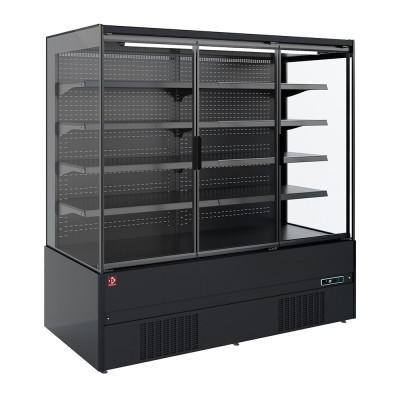
At Frigo Horeca, we offer a complete range of ventilated self-service wall cabinets in all lengths (700 to 2000 mm) and configurations (with or without hinged doors, with night curtain, with light box). This page brings together everything you need to know to choose the wall cabinet suited to your business, understand energy constraints and optimise your product display.

Why invest in a self-service wall cabinet?

The ventilated wall cabinet meets a fundamental marketing need: the direct visibility of fresh products to the customer. An impulse buying study is very clear: a visible and accessible product sells 2 to 3 times more than a product behind a door or in a drawer. This is particularly true for sandwiches, salads, sushi, prepared meals, drinks, cheeses and yoghurts in self-service.

The optimised vertical footprint is another major asset: the wall cabinet uses height over 1.8 to 2 m, where a display counter only occupies 1 to 1.2 m. At equal floor surface, you present many more references.

On the customer flow side, self-service reduces solicitation of your team: the customer takes, looks, chooses, which frees your staff for checkout and advice. It is a decisive organisational argument during rush hour.

In which establishments should you install a self-service wall cabinet?

Self-service food businesses are the first users: sandwich shops, snack bars, bakeries with catering, caterers with takeaway, food courts. The wall cabinet presents sandwiches, salads, wraps, drinks and desserts within reach of the customer.

The convenience stores and service stations make intensive use of it for drinks (soft drinks, water, juices), industrial sandwiches, fresh snacks, portioned cheeses. It comes in complement to self-service gondolas and vertical drinks fridges with glass doors.

Modern bakery-pastry shops often integrate a wall cabinet for cold drinks accompanying viennoiseries and lunch sandwiches. The wall cabinet naturally complements refrigerated display counters dedicated to products served by the seller.

The canteens, food courts and fast catering points appreciate the wall cabinet for drinks and prepared dishes in self-service, which combine well with other cold equipment such as pizza saladette fridges for preparation.

How to choose your refrigerated wall cabinet

Length and capacity

Wall cabinets exist in standard lengths: 700, 900, 1000, 1200, 1500, 2000 mm. The refrigerated wall element 700 suits small spaces, the ventilated wall element 1000 is the most common format for a medium business, and the ventilated wall element 1200 or wall element 1200 is suited for high-traffic businesses. Choose the length according to available space AND the volume of products you want to display.

Open or with hinged doors

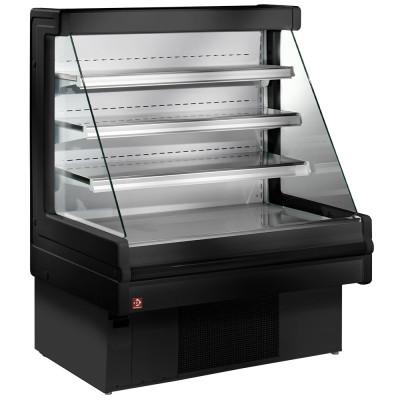
The fully open wall cabinet offers the most fluid access for the customer (total self-service), but consumes more energy because cold escapes permanently. It is the standard for very high traffic businesses.

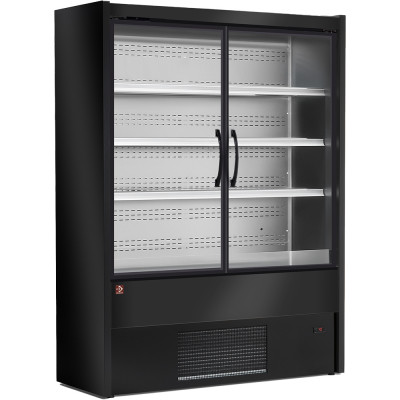
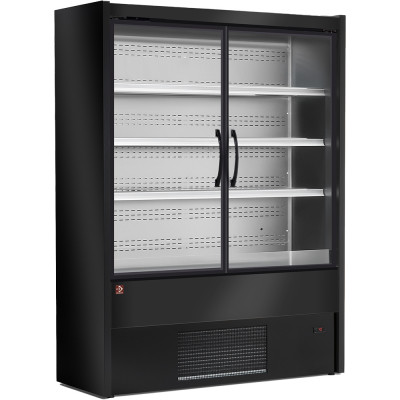
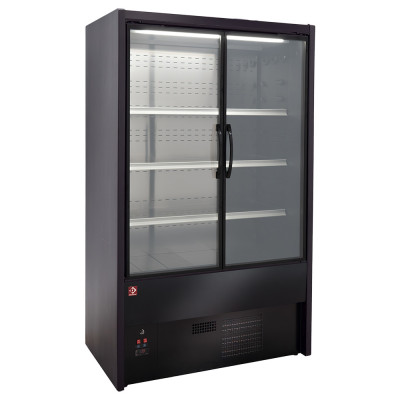
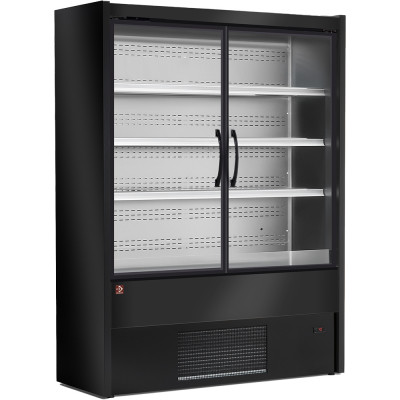
The wall cabinet with hinged glass doors, like the ventilated refrigerated wall element 900 hinged doors or the ventilated wall element with doors 1000, has become mandatory in several European regulations for energy savings reasons. Consumption drops by 30 to 50%, and the customer keeps total visibility thanks to glass doors.

Our advice: systematically prefer models with glass doors unless very strong commercial constraint (maximum impulsivity). The new F-Gas Energy Label regulation clearly favours closed models.

Night curtain and light box

The night curtain (blind that descends at end of service) significantly reduces consumption outside opening hours. It is an investment quickly amortised for businesses with limited opening hours.

The upper light box improves product display and facilitates signage (promotions, novelties). It is a marketing plus appreciated in modern businesses.

Our selection of self-service wall cabinets

Buying the right self-service wall cabinet

The refrigerated wall cabinet is a structural investment for your business, which must last 8 to 10 years and accompany your growth. Some golden rules:

Choose a recognised professional brand with a local after-sales network in Belgium. The wall cabinet is the equipment that consumes the most energy in a business: a failing compressor can blow your bill.

Prefer models with glass doors and night curtain to save in the long term. The difference in consumption amounts to thousands of euros over 10 years.

Think about the complete business ecosystem: your wall cabinet works with your self-service gondolas for dry products and ambient temperature drinks, your vertical drinks fridges for volumes, your display counters for served products, and possibly your pizza saladette fridges in production kitchen. A global vision ensures coherence and efficiency.

Finally, check the climate class and energy class: an undersized wall cabinet in climate or poorly insulated becomes an energy gulf in full summer.

Open or doored multideck: the key trade-off

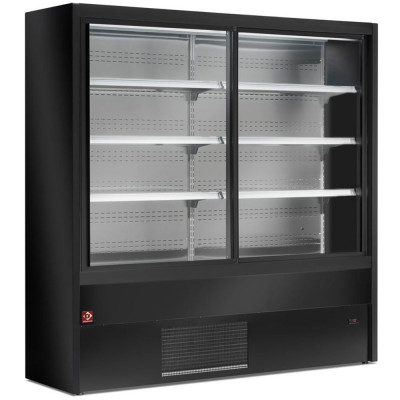
The open multideck maximises impulse purchase: customers help themselves with zero barrier, which makes it the standard in high-traffic zones. Its downside is energy: even a well-tuned air curtain leaks cold continuously. A multideck with hinged or sliding doors, like our 900 mm model with hinged doors, cuts consumption by 30–50% and stabilises temperature — an argument that has become decisive with electricity prices, to the point that supermarkets have been massively retrofitting doors. Our “Size” filter separates both families: the “with doors” values lead you straight to closed versions.

Which width for your floor plan?

The range runs from 900 to 2600 mm. A compact 1000 mm multideck dresses a till-side hot spot or a sandwich corner; a 1300 mm covers a convenience store’s fresh offer, and a large 2000 mm unit structures a true self-service aisle. Think in shelf metres: each level multiplies display area — a 2 m multideck with 5 levels gives 10 m of presentation on barely 1.5 m² of floor.

In-store placement: best practice

Place the multideck on the customer’s natural path, never in a dead end, and avoid direct sun or warm spotlights that heat the front row. Let air circulate: the low air return must stay clear, and a low ceiling can disturb the air curtain of open models. When restocking, respect the load line: one protruding product cuts the air curtain and sends the whole cabinet drifting. Vertical LED lighting showcases products with negligible heat — a detail that sells.

Temperature, HACCP and night blinds

Our positive multidecks run between -1 °C and +7 °C depending on the model: enough for sandwiches, drinks, dairy and fresh deli within food-safety requirements. Log readings morning and evening in your HACCP plan. If your open multideck has no doors, the night blind is the most profitable accessory in the shop: pulled at closing, it cuts night consumption by up to 30% and relieves the cooling unit during customer-free hours.

Maintenance and reliability

A multideck works hard: daily automatic defrosts, condenser dusted every two months, condensate tray checked, gaskets and blinds inspected quarterly. Plug-in models install on a simple dedicated 230 V socket; just ensure fresh-air supply in tight rooms, as the unit rejects its heat indoors. Well maintained, a professional multideck easily exceeds ten years of service.

Which multideck for which trade?

In a bakery-sandwich shop, a compact 900–1300 mm multideck near the till moves lunchtime sandwiches, salads and drinks — the sales peak lasts two hours, visibility is everything. In a convenience store or deli, one or two 1300–2000 mm modules structure the fresh aisle; doored versions win if the shop is heated in winter. For a caterer, the multideck extends the served counter with self-service take-away. And in a petrol station or night shop, where the cabinet runs 24/7, the consumption gap between open and doored models amounts to hundreds of euros a year — do the maths before choosing.

Refrigerated shelf profitability

A multideck is judged by revenue per shelf metre. Highest-margin products go at eye and hand level (1.20–1.60 m), impulse buys on top, heavy volumes at the bottom. Restock from the back of the production run (first in, first out) and keep the cabinet full at peak hours: a three-quarters-empty multideck sells less than a half-full one, perceived abundance being part of the buying mechanism. These simple adjustments raise the yield of the same square metre without touching the equipment.

Multideck FAQ

Multideck vs refrigerated display counter? The multideck is built for vertical self-service on several levels; the display counter, often glazed and served, presents on a single plane. For assisted sale, see our display counters.

Does an open multideck suit a warm room? Above 25 °C ambient, the air curtain struggles: prefer a doored version or check the model’s climate class.

Drinks only? Possible, but for a pure drinks aisle our glass-door drinks fridges are often better suited and more frugal.

This website uses cookies to ensure you get the best experience on our website