
No products available yet

Stay tuned! More products will be shown here as they are added.

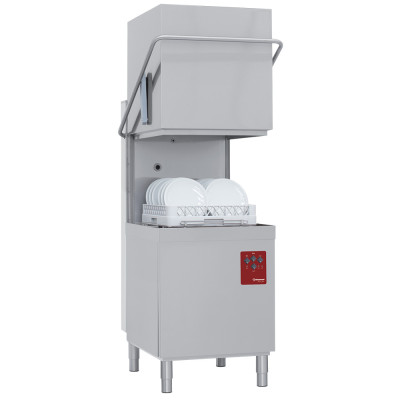
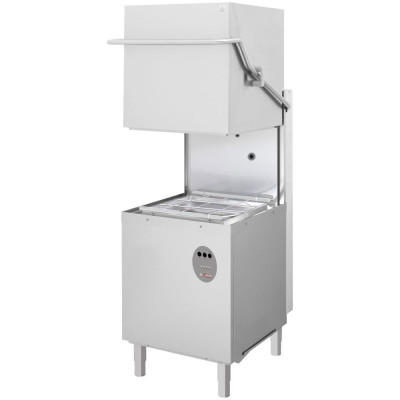
The hood-type dishwasher is the benchmark machine for high-throughput kitchens. Its lift-up hood allows racks to be loaded and unloaded from the top, at a sustained pace, where a front-loading dishwasher shows its limits. Brasseries, restaurants, canteens and institutions equip themselves with it to absorb peaks of dirty ware without slowing service. Frigo Horeca offers a full range of Diamond and Buffalo hood dishwashers, from standard models to versions with a steam condenser or built-in softener.

What is a hood-type dishwasher?

The hood-type dishwasher, also called a "pass-through" or "bonnet" machine, is distinguished by its lift-up hood. You slide a rack under the hood, lower it, and the cycle starts; on opening, the clean rack comes out the other side or at the front. This vertical ergonomics considerably speeds up rack turnover and reduces staff fatigue, as they no longer have to bend to load a front machine.

  • Fast top loading and unloading;
  • High cadence suited to large volumes;
  • High-temperature wash and rinse;
  • Robust all-stainless construction;
  • Options: steam condenser, softener, doser, break tank.

Hood or front: when to choose?

The choice between hood and front-loading depends above all on the volume to process. The front-loader, compact, slides under a counter and suits bars and small kitchens. The hood, bulkier, processes more racks per hour and becomes essential as soon as the flow of ware is sustained. Where the front-loader is loaded at worktop height, the hood fits into a washing line with inlet and outlet tables, for a continuous flow from dirty to clean ware.

Throughput and productivity

The hood's strength is its productivity. The vertical hood movement, fast and repeatable, allows racks to be chained far faster than front loading. Coupled with short cycles, the hood processes a large number of racks per hour, making it the ally of intense service. To size your machine, assess the number of covers to wash at peak: the higher the required throughput, the more the hood gains over the front-loader.

The steam condenser and heat recovery

On opening the hood, a cloud of steam escapes: this is inherent to high-temperature rinsing. Models fitted with a steam condenser-recovery unit capture this vapour, improving wash-area comfort by reducing ambient heat and humidity, and recover part of the thermal energy to preheat the water. On the "RC" versions, this recovery helps limit energy consumption while clearing the working atmosphere.

Break tank and water hygiene

Many hood dishwashers integrate a break tank, a cut-off reservoir that physically isolates the machine from the drinking-water network. This device prevents any backflow towards the network and ensures the rinse water stays clean. Required in many professional installations, the break tank is a guarantee of sanitary compliance and water safety.

Softener and limescale control

Limescale scales the heating elements, lengthens cycles and dulls the ware. The versions with a built-in softener or continuous softener treat the water directly in the machine. When the appliance has none, installing a water softener upstream remains essential in hard-water regions, to protect the machine and guarantee perfectly clear glasses and plates.

Detergent and rinse dosers

Precise dosing of products determines the quality and consistency of washing. Models with a built-in detergent doser automatically inject the right amount on each cycle, without staff intervention. On machines not so equipped, dosing kits can be added to automate detergent and rinse aid.

Pots and large racks

Some models, such as the DCR37/6 "& pots" range, accept 600×500 mm racks to wash utensils and bulky containers as well as tableware. These versatile versions suit kitchens wanting a single appliance able to handle both table ware and cooking pots, without multiplying machines.

Power supply

Hood dishwashers, more powerful than front-loaders, mostly run on 400 V three-phase to ensure a fast temperature rise between two racks. This power requires a suitable electrical installation, with a dedicated three-phase line. Check compatibility with your panel before buying; our team advises on the needs of each model.

How to choose your hood dishwasher

The right model depends on the required throughput, the available space, the supply and water hardness. For neat glass presentation, a dedicated glasswasher usefully complements the hood; for pots, a 600×500 rack is preferable. The condenser, softener and break-tank options are added according to the constraints of the kitchen and installation.

  • High throughput: 400 V hood with short cycles;
  • Hot, humid wash area: steam condenser-recovery;
  • Hard water: built-in or upstream softener;
  • Tableware + pots: 600×500 rack.

Installation and connection

The hood dishwasher connects to water, drainage and an electrical line sized to its power, most often 400 V three-phase. The space above must allow the hood to lift fully. We recommend commissioning by a qualified installer, who will set the water hardness, check the break tank and condenser, and ensure compliance with electrical and sanitary standards.

Day-to-day maintenance

Regular maintenance determines the machine's longevity: draining and cleaning the tank after service, checking the wash and rinse arms, cleaning the filters and periodic descaling. Using softened water and correct product dosing greatly reduces scaling. A well-maintained hood keeps its cadence and rinse effectiveness for years.

One hood, one washing line

The hood dishwasher comes into its own when integrated into a true washing line. Upstream, an inlet table receives the dirty ware and a spray-gun prewash clears the large residues; the rack then slides under the hood; at the exit, a draining table receives the clean ware. This continuous-flow organisation, from dirty to clean, avoids crossovers and smooths the work. Washing accessories — tables, dosers, cleaning stations — complete the installation and turn the hood into the heart of an efficient professional wash area, designed for the most intense service.

Energy and water savings

A well-set hood dishwasher controls its consumption. The rinse uses a determined volume of water, partly reinjected into the wash tank, which limits waste. Steam-condenser versions recover part of the vapour's energy to preheat the water, reducing energy spend accordingly. Finally, protection against limescale plays a key role: a scaled heating element heats for longer and pushes up the bill. Pairing the hood with softened water and dosing products correctly stabilise costs over time.

Staff comfort and safety

The hood's vertical loading spares the back: no more bending as in front of a front-loading machine. The lift-up hood also keeps hot-water splashes inside during the cycle, which makes the work area safer. On condenser models, capturing the vapour reduces heat and humidity in the wash area, a welcome comfort during long service. A well-designed washing station means staff who tire less and a safer kitchen, where cadence does not come at the expense of working conditions.

Stainless steel for durability

Like all professional washing equipment, the hood is built from stainless steel, inside and out. Stainless withstands constant humidity, the heat of cycles and cleaning products, with no corrosion or alteration. Its smooth, non-porous surfaces are easy to clean and disinfect, supporting impeccable hygiene. It is this robustness that allows a hood to chain hundreds of cycles a week for years, keeping its wash and rinse performance.

Hygiene and HACCP

The high-temperature rinse of hood dishwashers contributes directly to food safety: it limits microbial growth and ensures fast, towel-free drying, a frequent source of recontamination. Coupled with the break tank that protects the rinse water, the hood fits naturally into an HACCP approach. For establishments subject to strict checks, it is an asset: the consistency of mechanised washing is easier to trace and guarantee than that of manual washing.

Digital controls and ease of use

Modern hood dishwashers increasingly feature digital controls, as on the Buffalo DN975, which make daily operation simpler and more consistent. Clear displays show the selected cycle and temperatures, help the team follow the wash and rinse phases, and signal when intervention is needed, such as refilling salt or detergent. Combined with selectable cycle durations, these controls let staff match the wash to the soiling level without guesswork, keeping results consistent across shifts and operators. Intuitive operation also shortens training time for new staff, a real benefit in a sector with frequent turnover.

Frequently asked questions

What is the difference between hood and front?
The hood loads from the top via a lift-up bonnet and processes more racks per hour; the front-loader, compact, slides under a counter and suits smaller volumes.

What is the steam condenser for?
It captures the vapour released when the hood opens, reduces heat and humidity in the wash area, and recovers energy to preheat the water.

What is a break tank?
A cut-off reservoir that isolates the machine from the drinking-water network and prevents any backflow, required in many installations.

Can a hood wash cooking pots?
Yes, the "& pots" versions with a 600×500 mm rack accept utensils and bulky containers as well as tableware.

Do I need a three-phase installation?
Most hoods run on 400 V three-phase. Check compatibility with your electrical panel before buying.

Do I need a softener?
In hard water, yes. Some models integrate one; otherwise, an upstream softener protects the machine and guarantees mark-free glasses.

How many racks per hour?
Throughput depends on the model and chosen cycle, but the hood processes clearly more racks than a front-loader thanks to its fast vertical loading.

Explore the full Washing range and accessories from Frigo Horeca.

This website uses cookies to ensure you get the best experience on our website