
No products available yet

Stay tuned! More products will be shown here as they are added.

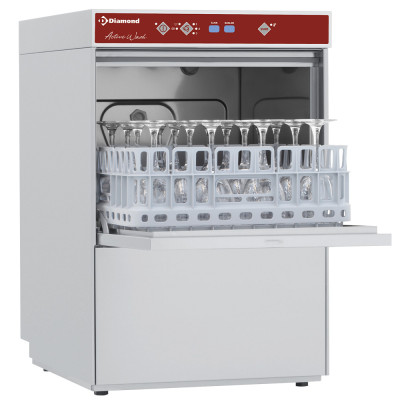
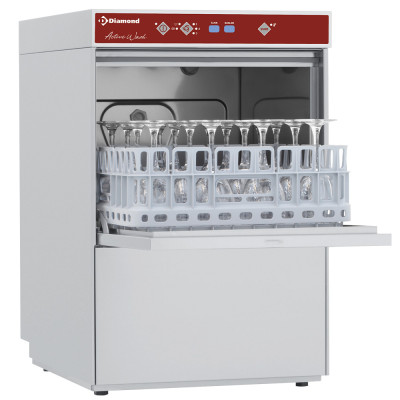
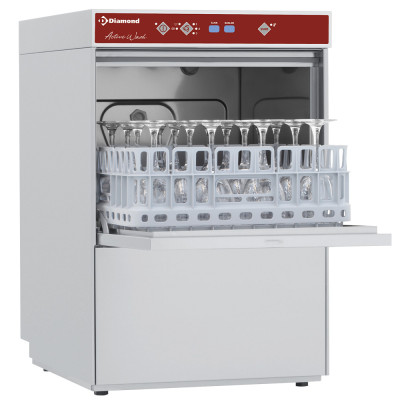
The glass and dishwashers are hybrid machines that combine in a single appliance the capabilities of a glasswasher and those of a dishwasher. Thanks to their 450×450 mm basket, larger than that of a standard glasswasher, they accept both glasses and plates and cutlery. This is the ideal solution for small establishments short of space but needing to wash both glassware and tableware. Frigo Horeca offers a selection of versatile Diamond models, with or without softener and drain pump.

What is a glass and dishwasher?

This hybrid machine sits between the compact glasswasher and the kitchen dishwasher. Its 450×450 mm square basket offers a compromise: big enough for plates, versatile enough for glasses. Like any professional equipment, it washes and rinses at high temperature in a few minutes, for a hygienic result and rapid drying. It installs under a counter or worktop, where two separate machines cannot fit.

  • Versatile 450×450 mm basket (glasses and tableware);
  • Short high-temperature cycles;
  • Compact format, one machine for two uses;
  • All-stainless, robust and hygienic construction;
  • Options: softener, drain pump.

For whom? When to choose the hybrid

The hybrid is aimed at establishments with moderate volume and limited space: small bars also serving food, food trucks, snack bars, neighbourhood brasseries, function rooms. Where a large restaurant will separate a glasswasher at the bar and a dishwasher in the kitchen, the small establishment benefits from investing in just one machine able to handle everything, provided volumes stay reasonable.

A versatile 450×450 basket

The 450×450 mm format is the key to versatility. Larger than the 400×400 basket of a glasswasher, it holds standard-sized plates while remaining compatible with glass racks. You can thus alternate racks by service: glassware during the day, tableware at meal times. The 046D/6 model illustrates this versatility in a compact machine.

Space and investment savings

The hybrid's main asset is economy: a single machine to buy, install, maintain and connect, instead of two. The reduced footprint frees up precious space behind the counter or in the kitchen. For an establishment starting out or whose volumes do not justify two appliances, it is a rational choice that covers all washing needs without overinvesting.

Limescale and the softener

Like all washing equipment, the hybrid suffers from limescale, which scales the heating elements and leaves marks on glasses. The built-in softener model (046D/6-A) treats the water directly in the machine. When the appliance has none, adding a water softener upstream remains essential in hard water to guarantee clear glasses and protect the machine.

Drain pump

When the drain is above the tank level, a drain pump is needed. The 046D/6-PS model integrates this pump and actively pushes the waste water out, widening installation possibilities. Our "Drain pump" filter lets you spot the equipped models.

Power supply

These models run on 230 V single-phase and plug into a reinforced socket, with no three-phase installation. This simplicity, suited to small establishments, eases installation and limits costs. The "Power supply" filter confirms compatibility with your electrical panel.

Cycles and versatility

The hybrid offers short cycles, often selectable according to the type of load. A gentle cycle suits glasses, a stronger one dirtier tableware. This adaptability allows switching from one use to another within the same day, which is the whole point of a single machine for mixed service.

Hybrid or two machines?

The choice depends on volume and space. For high throughput with an active bar and kitchen, two specialised machines — a glasswasher and a dishwasher — remain more efficient and allow washing in parallel. For moderate volume and constrained space, the hybrid covers both needs with one appliance. Our team helps you decide according to your real business.

Hygiene and food safety

The high-temperature rinse ensures impeccable hygiene of both glasses and tableware, and fast towel-free drying limits recontamination. The hybrid thus fits into an HACCP approach while simplifying the organisation of washing in small structures.

Installation and maintenance

The hybrid connects to water, drainage and a 230 V socket. Commissioning by an installer ensures correct setting of water hardness. Day to day, maintenance involves draining and cleaning the tank, checking the wash arms, cleaning the filters and periodic descaling. Softened water greatly reduces scaling and extends the appliance's life.

Stainless steel for durability

Built from stainless steel, the hybrid withstands humidity, heat and cleaning products. Its smooth surfaces are easy to clean and disinfect. This robustness lets it chain cycles for years, even in a demanding environment, without losing performance — an asset for an appliance that single-handedly handles all the establishment's washing.

The smart compromise for small catering

Not every establishment has the space or budget for two separate washing machines. The glass and dishwasher answers precisely this reality: it offers the versatility of a single appliance, able to switch from glasses to plates depending on the time of day. For a café serving a few dishes at lunch, a tapas bar or a small function room, it is the most rational compromise. It avoids tying up a rarely used second appliance, while providing reliable mechanised washing for the whole service, from morning coffees to evening glasses.

Racks and loading

Versatility relies on the set of racks. An open rack holds plates and saucers, a compartmented rack protects stemware, a cutlery basket completes the set. Choosing the right rack for the load optimises loading and the wash result, while protecting fragile glassware. Well organised, switching from one rack type to another takes a few seconds, letting you adapt the machine to the real service flow without wasting time.

Water and energy consumption

Like other professional washing machines, the hybrid controls its consumption with short cycles and a controlled-volume rinse. A single machine to run means a single one to heat and power, which limits overall energy spend compared with two appliances. Protection against limescale remains decisive: softened water prevents scaling of the heating elements and keeps consumption stable over time.

A controlled running cost

Beyond the purchase price, the whole cost of ownership falls with a single machine: one maintenance contract, one set of wear parts, one connection to monitor. For a small structure, this simplicity means less management time and more predictable charges. Combined with correct product dosing and treated water, the hybrid offers an excellent balance of versatility, reliability and operating cost.

The limits of the hybrid

The hybrid also has its limits, which should be known before buying. It does not wash in parallel: during a dish cycle, glasses wait, and vice versa. At very busy times, this constraint can slow service. Likewise, it does not match the pace of a hood-type dishwasher or the speed of a dedicated glasswasher. For large volumes, two specialised machines remain the benchmark; the hybrid shines above all on small and medium throughput.

Day-to-day maintenance

Regular maintenance ensures the machine's longevity. After service, drain and clean the tank, check the wash and rinse arms, rinse the filters. Periodically, descaling suited to water hardness preserves the heating elements and nozzles. Keeping good product dosing and using softened water greatly reduces scaling. A maintained appliance keeps short cycles and effective rinsing for many years of mixed service.

From bar to table in one machine

The strength of the hybrid is its ability to follow the rhythm of a small establishment across the day. In the morning, it handles cups and saucers; at lunch, plates and cutlery; in the evening, glasses for drinks service. This single point of washing keeps the workflow simple for a small team, who learn one machine rather than two. With a 450×450 mm basket and adaptable cycles, it bridges the gap between the bar and the kitchen without forcing the establishment to choose between glassware care and dishwashing capacity.

Pairing with the right water treatment

Because the same machine washes both glasses and plates, water quality matters even more: glasses reveal the slightest limescale, while plates benefit from effective rinsing. Pairing the hybrid with a water softener — built in or installed upstream — protects the heating element and guarantees clear results on every load. In very hard-water areas, an osmosis stage can be added for spotless glass drying. The right treatment chain turns a compact, affordable machine into a dependable workhorse for the whole establishment.

Frequently asked questions

Does a glass and dishwasher really replace two machines?
For moderate volume, yes: its 450×450 mm basket washes both glasses and plates. For high throughput, two specialised machines remain preferable.

What basket size?
450×450 mm, larger than a glasswasher (400×400) to hold plates, while remaining compatible with glass racks.

Does it run on a normal socket?
Yes, these models are 230 V single-phase and plug into a reinforced socket.

Do I need a softener?
In hard water, yes. Some models integrate one (046D/6-A); otherwise an upstream softener protects the machine and guarantees mark-free glasses.

When to choose the drain pump?
When the drain is above the tank level. The 046D/6-PS model is equipped with one.

For which type of establishment?
Small bar-restaurants, snack bars, food trucks, function rooms — anywhere space and volume do not justify two machines.

Discover the full Washing range and accessories from Frigo Horeca.

This website uses cookies to ensure you get the best experience on our website