No products available yet
Stay tuned! More products will be shown here as they are added.
Peeling potatoes by hand is one of the most time-consuming and arduous tasks in a kitchen. The professional potato peeler automates this work: in minutes, it processes several kilos of tubers with an even result and minimal waste. For chip shops, restaurants, canteens and caterers working with fresh potatoes, it is an investment quickly repaid in time and labour. Our selection brings together robust floor-standing peelers, designed for intensive use and easy cleaning, supporting fast, consistent production. The right peeler frees staff from a tedious chore and protects food cost.
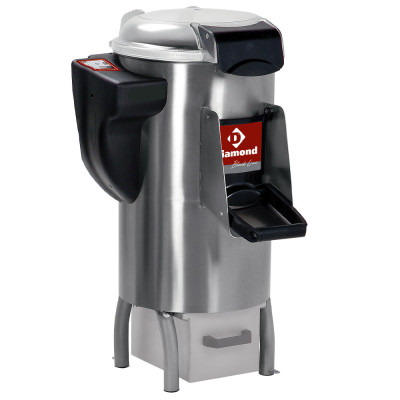
The principle is simple and effective. Potatoes are poured into a drum whose walls and rotating plate are coated with an abrasive. Under rotation and a flow of water, the tubers rub against the abrasive: the skin is removed by abrasion without cutting into the flesh. A cycle usually lasts one to three minutes depending on quantity and the desired result. At the end, a hatch empties the drum quickly. This automatic operation frees staff for other preparations during busy service.
Capacity depends on the volumes handled. The 10 kg PPF-10 peeler suits medium-sized establishments, with loads matched to everyday service. The 18 kg PPF-18 peeler targets larger needs: high-output chip shops, canteens and caterers handling large daily quantities. Choosing the right capacity avoids multiplying cycles while guaranteeing even peeling, and matches the appliance to the real pace of production.
A peeler's throughput is measured by the quantity processed per cycle and its duration. A shorter cycle speeds up production but must stay long enough for a clean result. Adjusting the time to the size and condition of the tubers optimises yield while limiting flesh loss. For high throughput, choose a larger capacity and a suitable motor, able to run cycles back to back without overheating during a busy service.
A peeler's reliability lies in its construction. A stable chassis, a hard-wearing drum and a quality abrasive coating ensure long life despite humidity and intensive use. Stainless steel surfaces clean easily and resist corrosion. The abrasive plate, a wear part, can be replaced to extend the appliance's life. Well-designed equipment keeps its performance over time, the mark of a durable, profitable investment.
Abrasive peeling needs a flow of water that carries away the peelings and aids friction. The appliance connects to the water supply and has a drain for waste. Plan a location near a water point and a drain, ideally with a peel trap to protect the pipes. A proper installation ensures clean operation and limits drain maintenance, while respecting hygiene rules.
The peeler's primary benefit is economic. Where manual peeling ties up an employee for long minutes, the machine processes the same quantity in one cycle, unattended. This freed time is reassigned to production, improving overall productivity. By working fresh potatoes rather than more expensive prepared products, the establishment also controls its food cost. Over time, these savings far outweigh the initial investment.
Regular cleaning of the drum, abrasive plate and drain hatch is essential to comply with good hygiene practice and the HACCP method. Stainless surfaces disinfect quickly and limit bacterial growth. Rinse after each use to prevent the build-up of starch and residue. A clean peeler ensures not only food safety but also better peeling quality, with no transfer of dirt from one cycle to the next.
Like any rotating appliance, the peeler requires precautions. Never open the lid during rotation and wait for the plate to stop completely before intervening. Respect the safety devices provided by the manufacturer and ensure a compliant electrical connection, shielded from water splashes. These simple habits protect users and meet the workplace safety obligations specific to professional kitchens.
The peeler is for anyone working with fresh potatoes: chip shops making homemade fries, restaurants serving purées and gratins, canteens and caterers handling large volumes, and operations focused on quality. Beyond potatoes, some models also peel carrots and other root vegetables depending on the abrasive. It is a central appliance for high-output kitchens, turning a chore into a fast, controlled step.
To last, the peeler needs regular maintenance: thorough cleaning after use, checking the abrasive's condition and replacing the plate when worn, and inspecting seals and drainage. Avoid overloading the drum, which strains the motor and degrades the result. A maintained appliance keeps clean peeling and steady throughput. Well looked after, it supports production for many years without notable performance loss.
Several criteria guide the choice: the capacity per cycle (10 kg for medium use, 18 kg for high output), the desired throughput, ease of cleaning and the ability to replace the abrasive, and the installation constraints (water supply and drainage). Also consider the floor footprint. Cross-referencing these with your daily potato volume will identify the model best suited to your kitchen.
The peeler is only the first step in a potato preparation chain. Once the tubers are peeled quickly and cleanly, they go to the chip cutter or vegetable cutter to be cut into calibrated sticks or slices, then cooked. This chain — peel, cut, cook — lets you offer homemade fries and fresh garnishes that clearly stand out from frozen products. Investing in a peeler therefore showcases real know-how: fresh produce, even calibration and superior taste, strong arguments to build loyalty and set the establishment apart.
Well-adjusted peeling limits flesh loss: too long a cycle removes too much, too short leaves skin residue. By adjusting the time to the size and condition of the potatoes, you optimise yield and reduce waste, which directly affects food cost. The peelings, collected cleanly, can also be valorised through composting or organic waste channels, in a more responsible, economical kitchen approach.
To get the most from the appliance, install it near a water point and a drain, in an easy-to-clean area. A suitable working height and clear access to the emptying hatch improve ergonomics and speed. A peel-collection tray protects the pipes and aids sorting. A station well organised around the peeler streamlines vegetable preparation and reduces strain, especially during large mise en place volumes.
Browse our peelers and complete your vegetable prep station with the other equipment in the dynamic preparation family. After peeling, cut your potatoes with our vegetable & chip cutters for calibrated homemade fries. Also complete preparation with slicers, mixers and scales & weighing machines. A coherent kitchen chains peeling, cutting and weighing for smooth production.
Which capacity should I choose? 10 kg per cycle for medium use, 18 kg for high-output chip shops and canteens.
How is peeling done? By abrasion: the tubers rub against an abrasive coating under rotation and water.
Is a water connection needed? Yes, the appliance needs a water supply and a drain for the peelings.
Can other vegetables be peeled? Depending on the abrasive, some models also handle carrots and root vegetables.
Does the abrasive wear out? Yes, the abrasive plate is a replaceable wear part to extend the appliance's life.
Is it cost-effective? Yes, the labour time saved and fresh-product work quickly repay the investment.
How do I maintain it? Clean the drum, plate and drain after each use and regularly check the abrasive.
Can I run several cycles in a row? Yes, professional models withstand repeated, sustained use throughout service.
Working fresh potatoes on site has become a genuine selling point. A peeler makes it realistic even under volume pressure: instead of paying a premium for pre-peeled or frozen products, the kitchen processes raw tubers on demand, keeping full control over freshness, portioning and cost. The visible commitment to homemade preparation reassures customers and supports a stronger positioning on the menu. From the 10 kg PPF-10 for medium service to the 18 kg PPF-18 for high output, the peeler turns a labour-intensive promise into a practical daily routine that protects both quality and margins.
During rushes, every minute counts. By batching peeling into short, unattended cycles, the appliance lets the team prepare large quantities ahead of service and react quickly when stocks run low. This buffering smooths the workload, reduces stress at the pass and ensures a steady supply of prepared potatoes throughout the day. For multi-site operations, standardising on the same models also simplifies training, maintenance and spare-part management across kitchens.
Is it suitable for small kitchens? Yes, a 10 kg floor model offers professional output with a reasonable footprint for smaller establishments.
Does it damage the potatoes? No, the abrasive removes only the skin; adjusting cycle time prevents excess flesh loss.
How noisy is a potato peeler? Operation is moderate and brief; short cycles mean the appliance runs only for a minute or two at a time, keeping the kitchen environment comfortable.