No products available yet

Stay tuned! More products will be shown here as they are added.

Professional vacuum packing machines for catering

Vacuum packing has become essential in professional kitchens. By removing the air around food, it extends preservation, protects flavours and opens the way to low-temperature cooking. For restaurants, caterers, butchers and contract kitchens, it is a lever for quality, organisation and savings. Our range covers every need: chamber machines, external suction machines, sous-vide cookers and bag sealers, from the compact countertop model to high-output chambers. Robust and stainless steel, they fit every type of production, from the small establishment to the large operation. Choosing the right machine means matching type, pump rate and chamber size to your volume.

Why vacuum packing in the kitchen?

Vacuum packing meets several needs. It multiplies the shelf life of food by limiting oxidation and bacterial growth, which reduces waste and eases stock management. It protects aromas and prevents drying out. It also allows advance portioning and low-temperature cooking, a technique praised for tenderness and consistent results. Well mastered, vacuum packing improves dish quality, work organisation and the establishment's profitability all at once.

The chamber vacuum machine

The chamber machine is the professional benchmark. The food and its bag are placed in a chamber where the air is fully removed before sealing, allowing a deep vacuum and the packing of liquids. Our range runs from the compact Buffalo 6.5 L CT014 to the powerful Diamond GA-104/S 16 m³/h and TA-90/IVAC 21 m³/h with touch screen. The TA-85/IVP stainless-tank versions offer an excellent robustness-to-throughput ratio for regular production.

The external suction machine

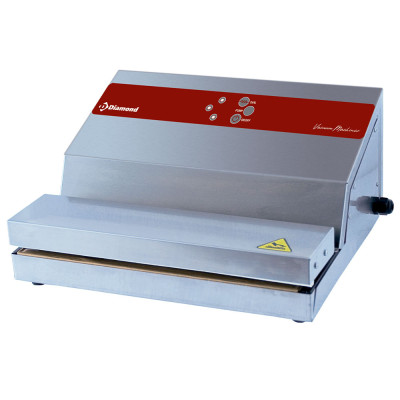
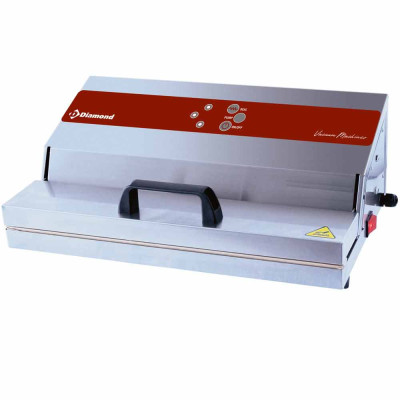
More compact and economical, the external suction machine draws air directly from the bag, whose end is placed on the seal bar. Ideal for small volumes and tight budgets, it suits occasional packing. Discover the Diamond VAX/33-L sealer, the VAX/45-L with a 430 mm bar, the Diverso WR-VAXL-33 or the Buffalo CN514. These models require embossed bags, whose texture allows air to be evacuated.

The low-temperature sous-vide cooker

A natural complement to vacuum packing, the HOT-BLOC/XP sous-vide cooker enables low-temperature cooking in a water bath controlled to the degree. Vacuum-packed food cooks slowly and evenly, preserving juices, tenderness and nutrients. This technique guarantees consistency impossible to achieve with conventional cooking, and frees up kitchen time. A touch screen and precise control make this appliance an ally of modern gastronomy.

The bag sealer

For simple sealing without vacuum, the Buffalo GJ459 bag sealer quickly closes bags with a 300 mm heated bar. It suits packing dry products, closing pouches or neat packaging for sale. Simple and economical, it complements a packaging station without needing a vacuum pump. It is a practical solution for everyday sealing needs at the counter or in the lab.

Pump rate and performance

The suction power, expressed in m³/h for chamber machines or l/min for external models, determines cycle speed and the vacuum level reached. A high rate, such as the 21 m³/h of the TA-90B/IVAC, speeds up production and allows a deeper vacuum, useful for liquids and low-temperature cooking. For moderate use, an 8 m³/h pump is enough. Match the rate to the volume packed daily.

Chamber size and seal bar

On a chamber machine, the chamber dimensions determine bag size and the number of pouches per cycle. On an external machine, the seal bar length (330, 430 mm…) sets the maximum bag width. Choosing a suitable chamber or bar avoids limiting production. The TA-85/IVAC and TA-90B/IVAC models offer large tanks for high needs, while the compacts suit small volumes.

Embossed or smooth bags

The bag choice depends on the machine. External suction machines require embossed bags, whose micro-channels allow air evacuation. Chamber machines use smooth bags, which are more economical. Using the right bag type is essential for an effective vacuum and a tight seal. Find our full range of vacuum bags suited to each appliance and use, from small formats to large packaging.

Preservation, hygiene and traceability

Vacuum packing is a major asset for preservation and food safety. By isolating food from air, it slows spoilage and limits cross-contamination in the fridge. Combined with date labelling, it secures use-by management and traceability, in line with the HACCP method. The machines' stainless surfaces clean easily. Rigorous vacuum packing contributes directly to the establishment's sanitary control.

Construction and durability

Our vacuum machines are designed for intensive professional use: stainless steel bodies, robust pumps and reliable seal bars. Stainless resists corrosion and cleans easily, ensuring hygiene and longevity. Professional chamber machines use durable oil pumps, whose regular maintenance guarantees performance over time. Investing in robust equipment ensures reliable packing for many years.

Pump maintenance

Chamber machines with an oil pump need specific maintenance: periodic oil checks and changes as recommended, to preserve the vacuum level and longevity. Clean the chamber and seal bar after use, and check the lid gasket, a part essential to the seal. For external models, check the bar and the Teflon. Regular maintenance keeps optimal performance and prevents breakdowns.

How to choose your vacuum machine

Several criteria guide the choice: the type (chamber for a deep vacuum and liquids, external suction for tight budgets, cooker for low temperature, sealer for simple sealing), the pump rate, the chamber or bar size, and the volume packed. Also consider maintenance and bag type. Cross-referencing these with your activity will reveal the most suitable appliance.

Vacuum packing for better organisation

Beyond preservation, vacuum packing transforms a kitchen's organisation. It allows preparing and portioning ahead, smoothing the workload between services and anticipating activity peaks. Packed preparations store cleanly, are easy to identify and regenerate on demand, reducing stress during the rush. For a caterer or central kitchen, vacuum packing is a pillar of just-in-time production: it secures quantities, makes lead times reliable and limits losses, while guaranteeing consistent quality from one service to the next.

Vacuum packing and cost control

Vacuum packing is also an economic lever. By extending the shelf life of food, it reduces losses from unsold stock and allows buying in larger quantities on better terms. Low-temperature cooking, by limiting cooking weight loss, improves the yield of meat cuts. From the compact 6.5 L to the large 21 m³/h chamber, each machine contributes to finer stock and margin management, fully valorising fresh products worked on site.

Our selection and related categories

Browse our vacuum machines and complete your packaging station with the matching vacuum bags and the wrapping film dispensers. Also discover the other equipment in the dynamic preparation family: meat mincers, slicers and scales & weighing machines. A well-planned kitchen combines cutting, weighing and packaging for optimal preservation.

Frequently asked questions

Chamber or external suction? The chamber offers a deeper vacuum and handles liquids; external suction is more compact and economical.

Can liquids be vacuum-packed? Yes, but only with a chamber machine, which controls the vacuum in a closed chamber.

Which bags should I use? Embossed bags for external machines, smooth bags for chamber machines.

What is low-temperature cooking? Slow cooking of vacuum-packed food in a controlled bath, for optimal tenderness and consistency.

Does the pump need maintenance? Yes, oil pumps require periodic checks and oil changes.

Does vacuum extend shelf life? Yes, by removing air it slows spoilage and markedly extends food shelf life.

Which machine for a caterer? A chamber machine with good throughput, to pack liquids and preparations in volume.

Vacuum packing for better organisation

Beyond preservation, vacuum packing reshapes how a kitchen runs day to day. Preparing and portioning ahead lets the team spread the workload across quieter periods and walk into service with components ready to regenerate on demand. Packed items store neatly, stack efficiently and are easy to label and rotate, which supports first-in-first-out stock control and reduces both waste and last-minute stress. For caterers and central kitchens producing for several sites or events, vacuum packing is the backbone of reliable, repeatable output, keeping quality identical whoever is on shift and wherever the food is finished.

Vacuum packing and cost control

Vacuum packing is equally a cost lever. Longer shelf life means fewer write-offs from unsold stock and the freedom to buy in bulk on better terms. Low-temperature cooking limits weight loss during cooking, improving the yield of premium cuts and protecting margins on expensive proteins. From the compact 6.5 L chamber to the large 21 m³/h chamber, each machine helps turn careful purchasing and fresh, on-site work into measurable savings, making the investment pay for itself over a season of steady use.

Is vacuum packing suitable for small kitchens? Yes, a compact chamber or external suction machine brings the benefits of vacuum even in a small kitchen.

What pump rate for intensive use? For sustained production, choose a 16 to 21 m³/h pump, which speeds up cycles and pushes the vacuum further.

Can I cook directly after packing? Yes, vacuum-packed food can go straight into a sous-vide cooker for precise, even low-temperature cooking.

How do I get a tight seal? Use the correct bag type, keep the seal bar clean and ensure the lid gasket is in good condition for a reliable, airtight closure.

This website uses cookies to ensure you get the best experience on our website