
No products available yet
Stay tuned! More products will be shown here as they are added.
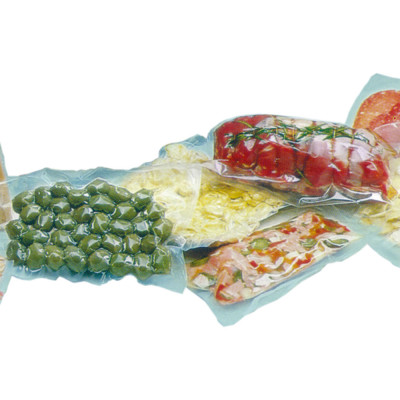
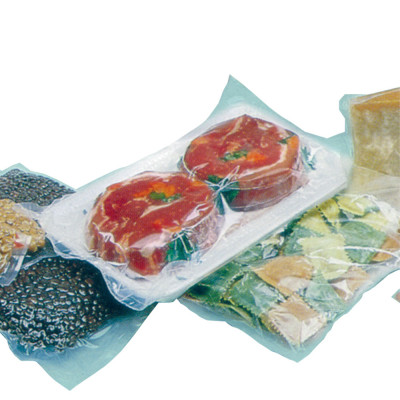
The vacuum bag is the essential consumable of any kitchen equipped with a vacuum packing machine. It protects food from air, extends its shelf life and enables low-temperature cooking. Choosing the right bag — embossed or smooth, in the right size — is essential for an effective vacuum and a tight seal. Our range covers every need, from small formats to large packaging, in food-grade quality suited to direct contact, chilling and cooking. Compatible with our machines, these bags guarantee optimal food preservation every day.
The choice depends on your machine. Embossed bags, with fine micro-channels on one side, are designed for external suction machines: the channels let the air be drawn out effectively. Smooth bags, more economical, are intended for chamber machines, which create the vacuum in a closed chamber. Using the right type is essential: a smooth bag on an external machine will not evacuate the air properly. Our range offers both types in several dimensions.
For an optimal result, always pair the bag with the right machine. The Vogue embossed bags and Diamond embossed bags suit external suction sealers. The Diamond smooth bags and Vogue smooth bags are perfect for chamber machines. Discover all our vacuum machines to build the complete set-up. The right machine-bag pairing guarantees a deep vacuum, a reliable seal and extended preservation.
Our bags come in several formats to suit all foods: from the small 150 x 300 mm for individual portions to the large 300 x 400 mm for bulky items, including the versatile 200 x 300 mm and 250 x 350 mm. Choosing the right format limits film waste and ensures a clean seal. Pack quantities also vary: packs of 50 or 100 for everyday use, up to 1000 or 2500 pieces for large production.
Our bags are made of food-grade materials, suitable for direct contact with food. Their multi-layer structure ensures good mechanical strength and an effective barrier against air and moisture. This strength prevents perforations and guarantees the vacuum's tightness over time. For low-temperature cooking, be sure to use bags designed to withstand the heat of the water bath. The bag's quality directly determines the success of preservation and sous-vide cooking.
The vacuum bag serves several functions. For preservation, it markedly extends the shelf life of food in the fridge by removing air. For freezing, it protects against freezer burn and preserves product quality. For low-temperature cooking, suitable bags let you cook food directly in the controlled bath. This versatility makes the vacuum bag a central consumable for kitchen organisation and quality.
Vacuum packing is a major asset for hygiene and the HACCP method. By isolating food from air, the bag limits oxidation, bacterial growth and cross-contamination in the fridge. Combined with clear date labelling, it secures use-by management and traceability. Use a new bag for each food and do not reuse a bag that held raw products. These good practices guarantee the establishment's food safety.
Vacuum bags support many tasks: advance portioning, preserving preparations, storing raw food, freezing, low-temperature cooking and stock organisation. In contract catering, catering and fine dining, they are at the heart of just-in-time production. Well-sized and of good quality, they reduce waste, make lead times reliable and guarantee consistent quality of packed products, from the lab to service.
Three criteria guide the choice: the type (embossed for external suction machines, smooth for chamber machines), the dimensions suited to your food, and the pack quantity (from small packs to large quantities). Also check compatibility with low-temperature cooking if needed. Cross-referencing these with your machine and activity volume will help you choose the bags best suited to your kitchen.
Keeping a range of formats avoids using a large bag for a small portion, a source of waste and poor sealing. For individual portions and herbs, choose the small 150 x 300 mm formats; for cuts of meat, fish or prepared dishes, opt for the large 300 x 400 mm. Store bags flat, dry and away from dust, in a clean, easily accessible spot of the packaging station. Good storage preserves the film quality and speeds up work during vacuum sessions.
The pack quantity directly affects cost. Large packs, such as the 1000 Diamond bags or the 2500 smooth bags, offer a better unit price for high-consumption establishments. The Vogue packs of 100 suit more moderate needs. By matching the format to each food and avoiding oversized bags, you limit film use and optimise the consumables budget, a significant item in a kitchen using vacuum daily.
Low-temperature cooking relies entirely on bag quality. Vacuum-packed, the food cooks slowly in a controlled water bath, preserving juices, tenderness and nutrients. It is essential to use heat-resistant bags designed for this use, to avoid any alteration. Paired with a sous-vide cooker, these bags open the way to precision cooking, praised for consistency and quality, from fine-dining restaurants to central kitchens.
Vacuum success depends as much on the bag as on technique. Keep the bag opening clean and dry: a trace of grease or moisture on the seal area compromises tightness. Do not fill the bag to the edge and leave enough margin for the seal. For food with bones or sharp angles, double the protection to avoid perforations. Finally, choose a format suited to the product: too large wastes film; too small does not seal properly. These simple steps ensure a lasting vacuum and optimal preservation.
Browse our vacuum bags and pair them with our vacuum machines for a complete packaging station. For everyday protection, also discover our film dispensers. Complete your kitchen with the other equipment in the dynamic preparation family, such as slicers and scales & weighing machines. A well-planned kitchen combines cutting, weighing and packaging for optimal preservation.
Embossed or smooth? Embossed for external suction machines, smooth for chamber machines.
Can I cook in the bag? Yes, with bags designed for low-temperature cooking in a controlled bath.
Which size should I choose? Match the dimension to the food: small formats for portions, large for bulky items.
Are the bags suitable for freezing? Yes, they protect against freezer burn and preserve the product.
Can a bag be reused? No, for hygiene reasons, especially after a raw product: use a new bag.
Are they food-grade? Yes, they are suitable for direct contact with food.
Which pack for large production? Large packs (up to 1000 or 2500 pieces) suit high consumption.
Beyond preservation, the vacuum bag structures a kitchen's organisation. It allows preparing and portioning ahead, clearly identifying food and managing stock just in time. Packed preparations store neatly, are easy to spot and regenerate on demand, reducing stress at service time. For a caterer or contract kitchen, always having the right bags, in the right formats, is the condition for smooth, uninterrupted production. Running out of the correct bag mid-service can stall an entire packing routine, so keeping a sensible buffer of each type and size is simply good practice.
The best results come from thinking of bags and machine as one system. An external suction sealer needs embossed bags; a chamber machine works best with smooth bags. Keeping both types in the most-used sizes means the team can vacuum-pack anything from a single portion of herbs to a large joint without improvising. Standardising on a small set of reliable formats also simplifies ordering and stock control, so the consumables budget stays predictable and the kitchen never improvises with the wrong bag for the job.
Do I need a different bag per food type? Yes, use a new, suitable bag for each food to respect hygiene and avoid contamination.
What thickness for fragile products? Choose strong bags; for sharp-edged food, double the protection to avoid perforation.
How should I store bags? Flat, dry and away from dust, in a clean, accessible spot of the packaging station.
Which pack quantity for a busy kitchen? Large packs offer a better unit price and fewer reorders, ideal for establishments that vacuum-pack throughout the day.
Can embossed bags go in a chamber machine? They work, but smooth bags are more economical and recommended for chamber machines.
Do bags affect cooking results? Yes, only heat-resistant bags should be used for sous-vide cooking; quality bags keep a tight seal and protect texture and flavour.
How do I avoid a failed seal? Keep the bag opening clean and dry, leave a margin above the food, and never overfill the bag before sealing.
Are the bags recyclable? Check local recycling rules; in all cases, use a fresh bag per food for hygiene and keep used bags out of food-contact reuse.